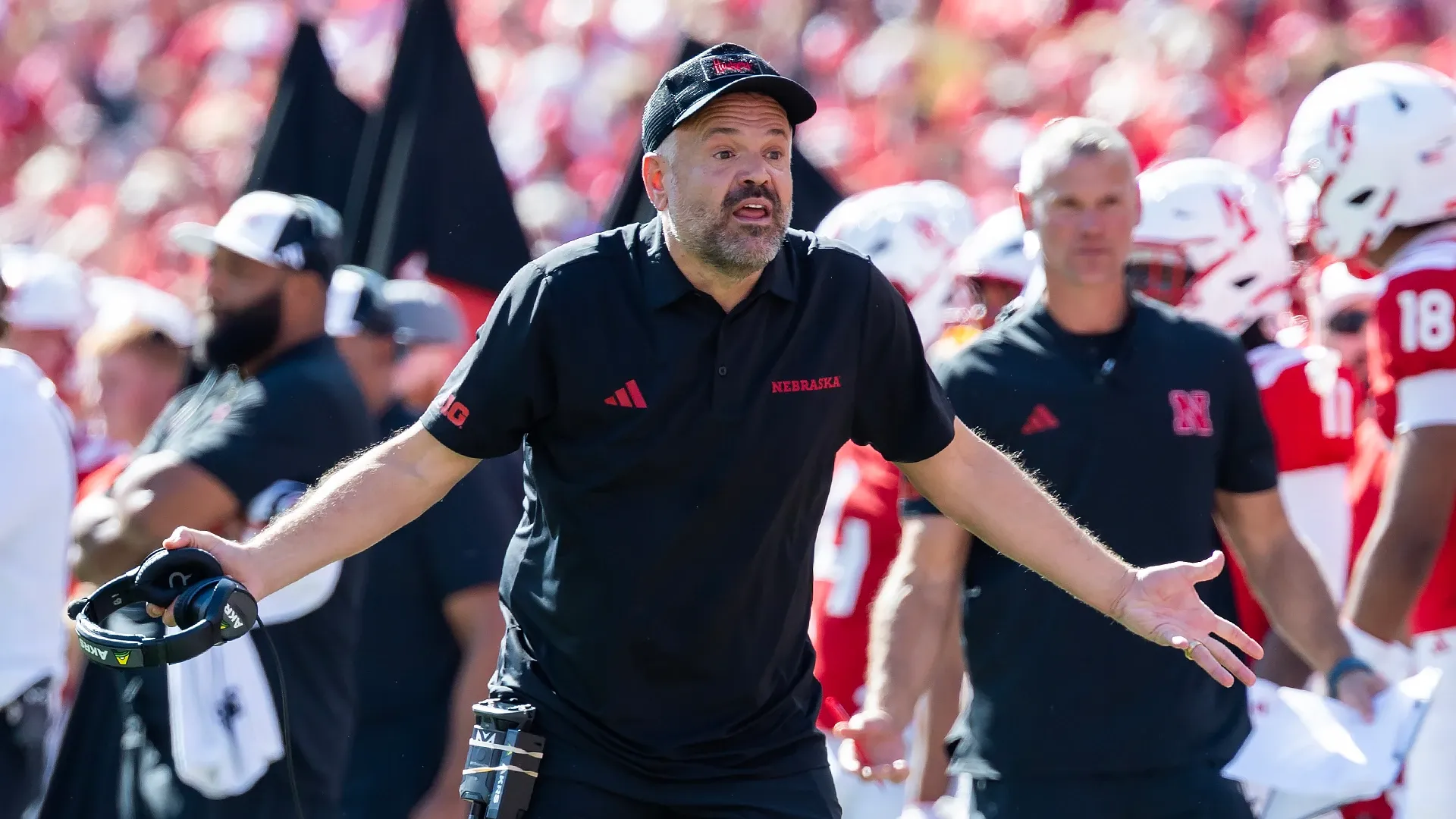

Nebraska’s offensive coordinator opening is not going to be a particularly attractive job for most candidates. Matt Rhule is on the clock. Unless the Huskers reach the College Football Playoff in 2027, his seat will be as hot as any in the sport. That makes this a classic high-risk, high-reward opportunity: succeed, and you can establish yourself as a legitimate Power Four play-caller; fail, and you leave with a P4 blemish on your résumé and have to restart the climb.
Rhule’s track record with coordinator hires has been questionable. His initial choices have rarely been the ones that stuck. Mike Ekeler, Tony White, and Rob Aurich were not the first names on his list, yet they have been the ones who delivered results. The central question now is whether Rhule is willing to set his ego aside and make the hire that is best for Nebraska rather than the one that feels safest or most familiar to him.
That means giving the new coordinator real autonomy. He cannot be asked to keep holdovers from the current staff the way Aurich was. Assistants such as Marcus Satterfield need to be cleared out so the new play-caller can bring in his own people and install his own system. Rhule also needs to resist the temptation to chase established names the game has largely moved past, or Dana Holgorsen-like hires; guys like Mike Locksley, Kasey Dunn, and even Mike Norvell fall into that category.
The most practical path is to target a coach who can bring a ready-made staff and culture with him. Given the uncertainty around Rhule’s future, landing a current Power Four coordinator and his players will be difficult even if Nebraska launches cash at them. That reality points toward successful coaches at the FCS level or at smaller FBS programs who are ready for a step up.
Finally, the scheme itself has to fit both Nebraska and the Big Ten. Pure Air Raid or other pass-heavy systems have not proven sustainable in this league or for this program. Nebraska needs a run-first, play-action-based offense built around a physical offensive line. The new coordinator must create favorable matchups, convert critical downs, and occasionally surprise defenses with well-timed creativity.
Here are ten candidates who fit those criteria.
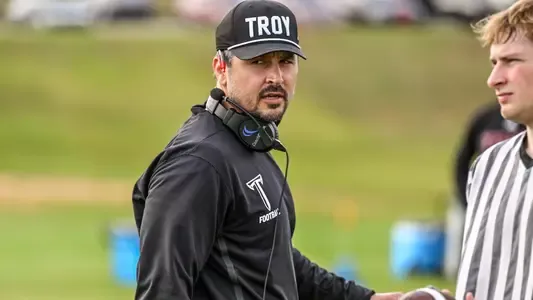
Adam Austin (Troy)
Austin, a former Arizona quarterback, spent years building offenses at the Division II and FCS levels, including long stints at Midwestern State before joining Tarleton State. He was promoted to OC ahead of 2024 and in 2025 orchestrated the FCS’s top-scoring offense (42.4 points per game) and a top-10 total offense unit that was efficient and explosive. He earned FootballScoop FCS Coordinator of the Year honors. In early 2026, he moved to Troy as OC/QBs coach.
He runs a “Veer and Shoot” system, an aggressive, wide-open spread that is RPO-heavy with a downhill run game paired with vertical shots. It stresses defenses horizontally and vertically while aiming for balance. The approach is simple enough for quick installation yet explosive.
Nebraska fit: Austin’s proven ability to generate elite scoring and yards at multiple levels, plus his RPO/downhill run foundation, aligns with Rhule’s desire for physicality plus explosives. He has a track record of developing quarterbacks and elevating programs quickly, though the jump to the Big Ten would be significant.
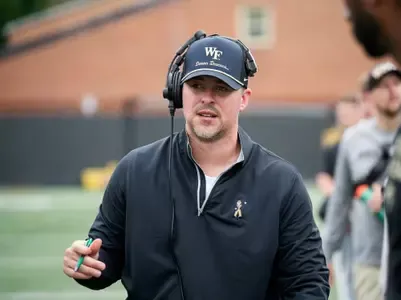
Rob Ezell (Wake Forest)
Ezell, a former Alabama player and longtime analyst/GA under Nick Saban, coached tight ends at South Alabama before becoming its OC/QBs coach in 2024. He joined Wake Forest for 2025 and has produced high-powered results, with the Demon Deacons averaging nearly 40 points and 450+ yards in stretches of 2026 (top-15 nationally in key categories) while featuring dual-threat quarterback Gio Lopez.
His offense emphasizes balance, explosiveness, and quarterback dual-threat ability within a modern, multiple framework shaped by Alabama’s culture of detail and execution. It has shown the ability to score efficiently and stretch the field.
Nebraska fit: Ezell brings Power conference experience, a national-championship pedigree, and a high-scoring, relatively balanced attack that could translate well. His youth and upward trajectory make him a rising name; the scheme’s dual-threat elements fit a mobile quarterback while the Alabama background suggests attention to fundamentals and toughness.
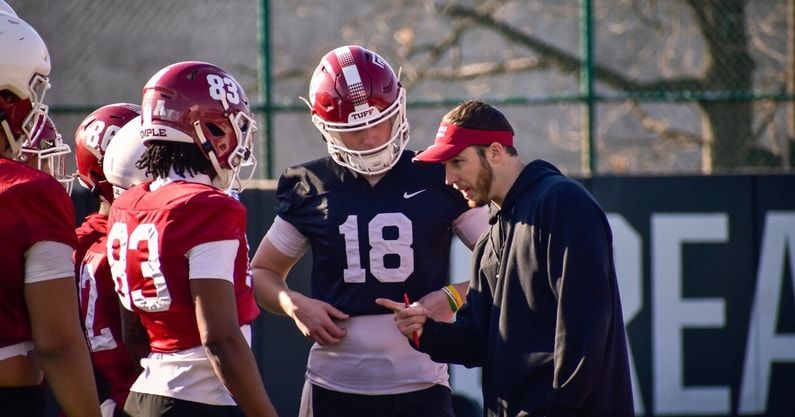
Tyler Walker (Temple)
Walker rose quickly: after coaching at Montana State (tight ends/fullbacks, then OC/QBs in 2024), he helped the Bobcats lead the FCS in scoring, total offense, and rushing while going 15-1 and reaching the championship game. He was named FootballScoop Coordinator of the Year for that performance before moving to Temple as OC/QBs under K.C. Keeler in 2025, where the Owls improved sharply in scoring, rushing, and efficiency metrics.
The style is run-heavy and physical, built around a mobile/dual-threat quarterback, multiple backs, and a ground attack that creates play-action opportunities. It prioritizes efficiency, red-zone success, and complementary passing.
Nebraska fit: Walker’s elite run-game production and ability to elevate a program match Rhule’s stated preference for physical, run-capable football. FCS championship-level success and a strong first year at the FBS level demonstrate adaptability; Temple’s improvement suggests he can install quickly.
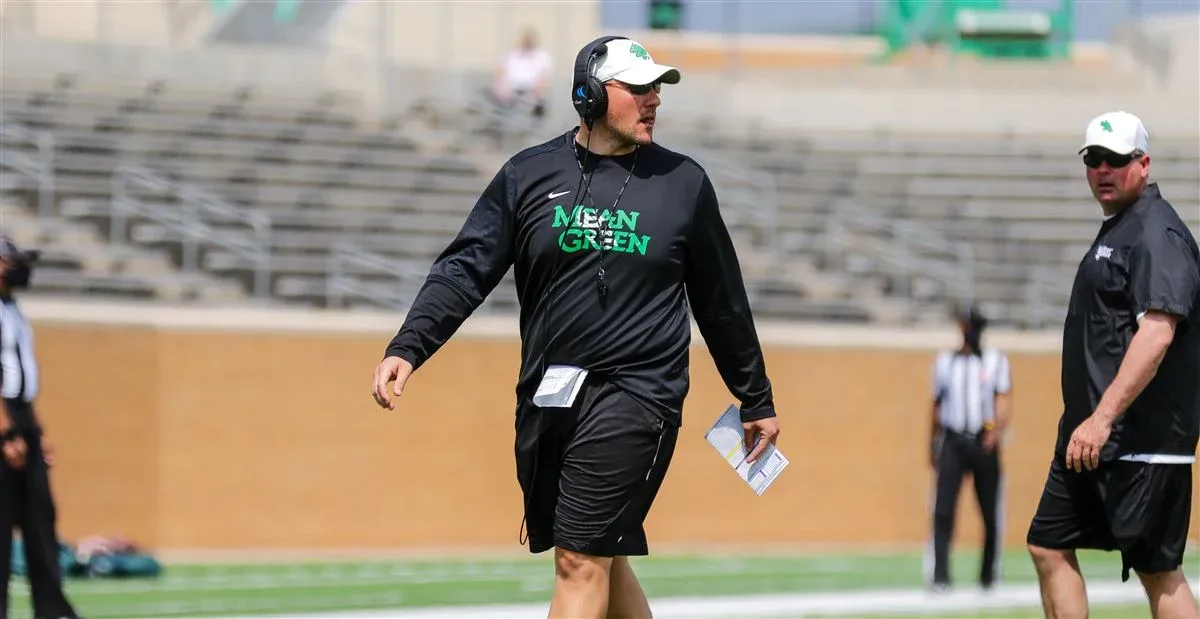
Mike Bloesch (North Texas)
Bloesch previously served as co-OC, then OC/play-caller at North Texas, helping the Mean Green to strong protection numbers and a Conference USA title-game appearance. He spent 2023–24 at Cal as run-game coordinator/OL (then OC/OL in 2024), improving protection and contributing to bowl berths. In 2026, he returned to North Texas as run-game coordinator and tight ends coach under Neal Brown.
He is an offensive-line and run-game specialist whose offenses emphasize physicality up front, protection, and a strong ground attack that sets up the rest of the offense.
Nebraska fit: Bloesch’s focus on the run game and line play directly addresses Big Ten physicality and Rhule’s “run the ball when we want” goal. His prior FBS OC experience and proven ability to improve protection and rushing efficiency make him a practical, scheme-flexible option.
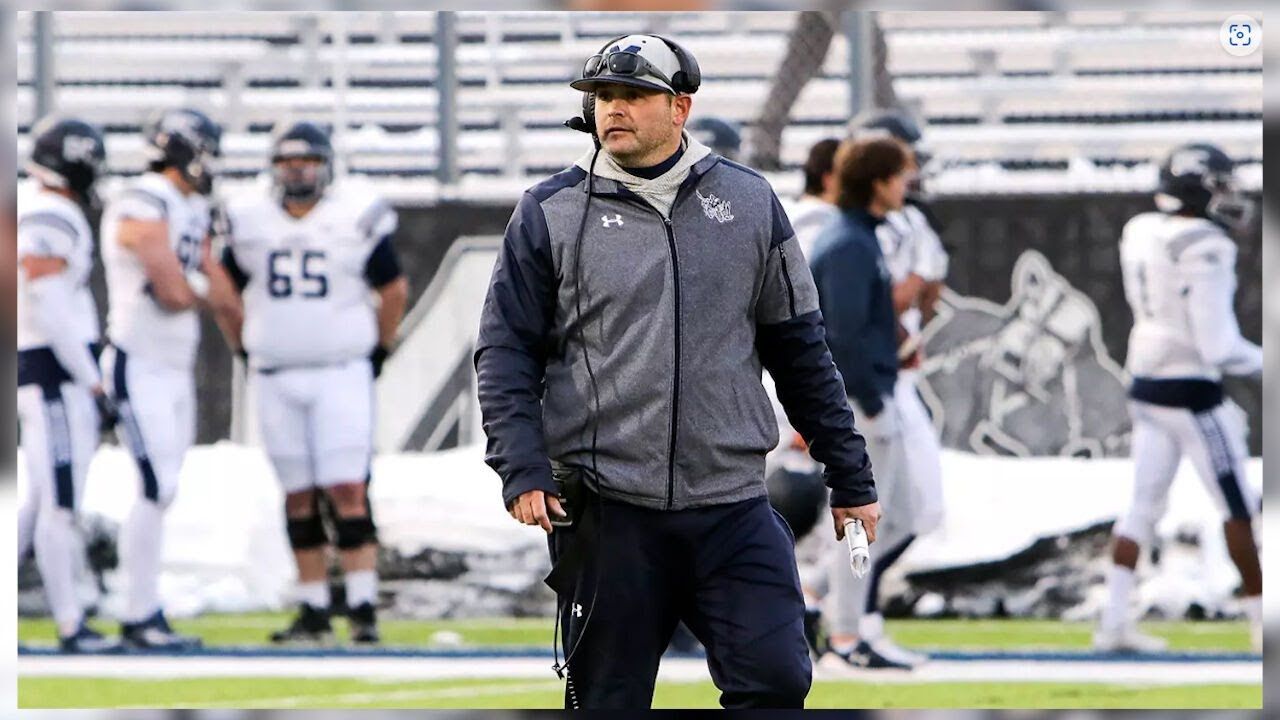
Pete Sterbick (Montana State)
Sterbick has a long résumé as a play-caller and former head coach. He was OC at Colorado Mines and head coach there. He joined Montana State as OC/QBs coach in 2025, helping the Bobcats win the FCS title with an efficient, adaptable offense that set records for completion percentage and integrated a new transfer quarterback seamlessly. In 2026, the unit has remained productive and has multiple heavy tight-end and two-back looks.
The offense is described as highly multiple and adaptable to personnel, balancing the run with efficient passing and using tight ends and formations creatively. It prioritizes physicality and explosive potential while remaining flexible.
Nebraska fit: Sterbick’s championship pedigree, adaptability, and ability to build around available talent, especially quarterbacks, fit a program seeking identity and execution. His success elevating lower-level and FCS teams suggests he can install a tough, efficient system suited to the Big Ten.
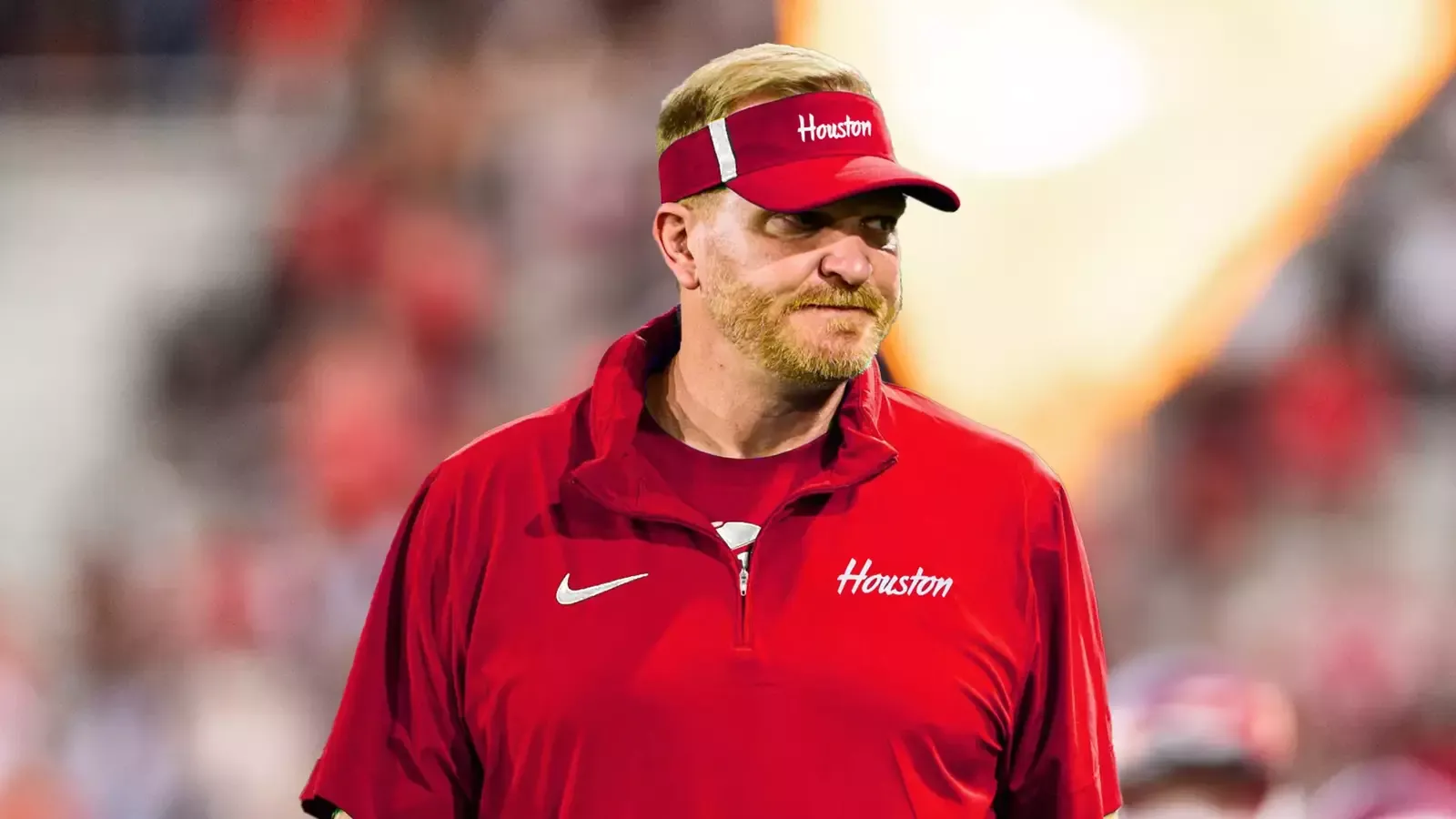
Slade Nagle (Houston)
Nagle has long worked under Willie Fritz as a tight end, then OC/QBs at Tulane, where the offense scored consistently and reached 11 wins. After a 2024 stint at LSU, he became Houston’s OC in 2025 and oversaw a major turnaround: the Cougars jumped dramatically in total offense, scoring, rushing, passing efficiency, red-zone conversion, and time of possession. Dual-threat quarterback Conner Weigman thrived with high touchdown totals.
The system is balanced and multi-faceted, with strong situational football and an emphasis on a dual-threat quarterback alongside the run and play-action. It improved dramatically from a historically poor base.
Nebraska fit: Nagle’s proven ability to transform an offense quickly, emphasis on balance and red-zone efficiency, and experience with dual-threat quarterbacks align well with Nebraska’s needs. His work in Power conferences and with Fritz’s physical style offers a ready template for Big Ten play.
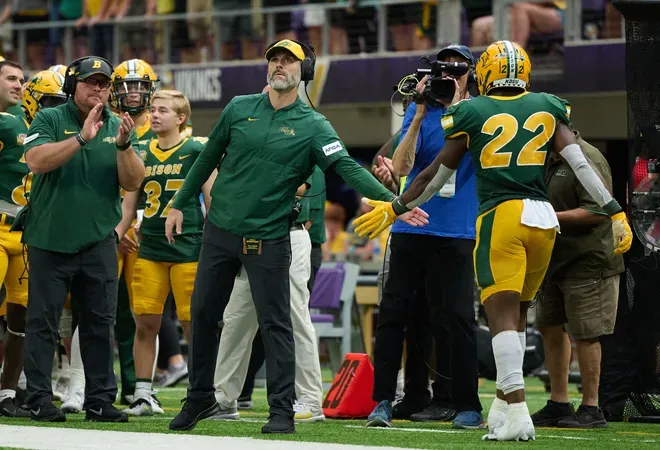
Dan Larson (North Dakota State)
Larson joined NDSU in 2019 as the running backs and then offensive line coach for several years, contributing to national titles and developing NFL-caliber linemen. He was promoted to OC/tight ends/fullbacks ahead of 2025. The Bison have a traditional, physical, run-dominant identity; Larson has maintained high expectations for clean, tough football while the program transitioned toward FBS competition.
The offense is built around a powerful ground game, offensive-line excellence, and complementary play-action, with an emphasis on physicality, low turnovers, and controlling the line of scrimmage.
Nebraska fit: Few candidates better match a “run the damn ball” physical identity. Larson’s line-coaching background and NDSU’s championship culture of toughness would translate directly to Big Ten trench play, though the jump from FCS/FBS-transition to the full Power conference would require adjustment. NDSU also has four former QBs in the NFL right now, which would help in recruiting as a whole and retaining Trae Taylor.
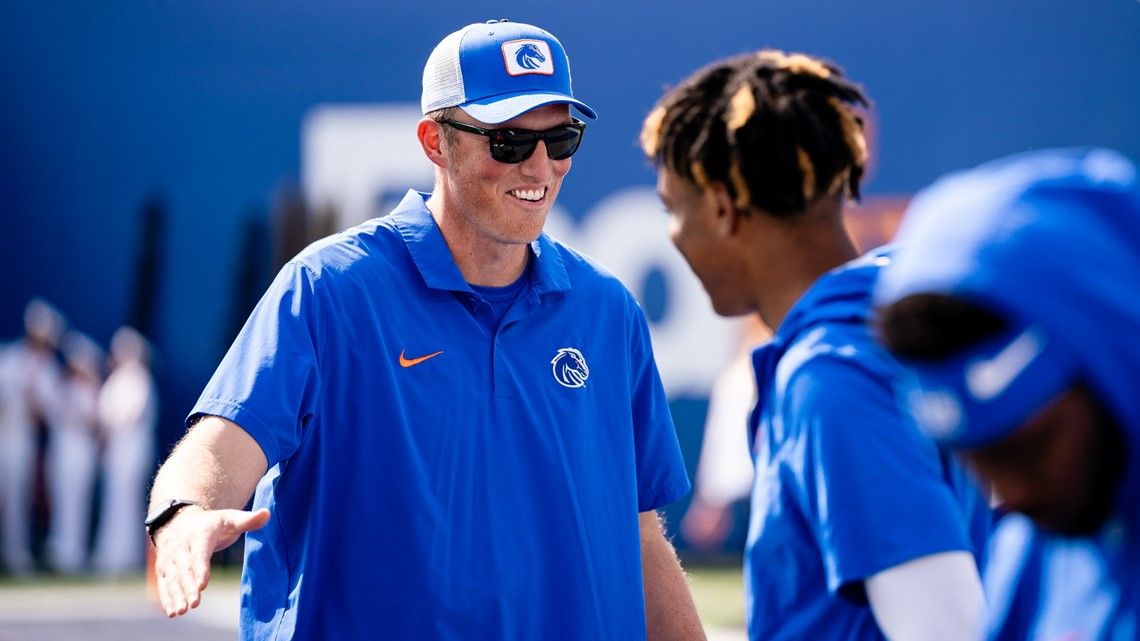
Nate Potter (Boise State)
Potter, a former Boise State consensus All-American offensive tackle and NFL player, returned to his alma mater as a coach. He served as tight ends/run-game coordinator, co-OC, and was promoted to full OC ahead of 2025. The Broncos have featured balanced, explosive attacks while winning conference titles.
The style is balanced and multi-faceted, with a strong run-game foundation with zone and power concepts paired with play-action and efficient passing. It leverages tight ends and a physical front.
Nebraska fit: Potter’s player pedigree, run-game expertise, and success with high-powered yet balanced Boise State offenses fit Rhule’s physical-plus-explosives vision. Familiarity with Group of Five/Power transition environments and tight-end usage would help immediately. Will be hard to pull away from his Alma Mater.
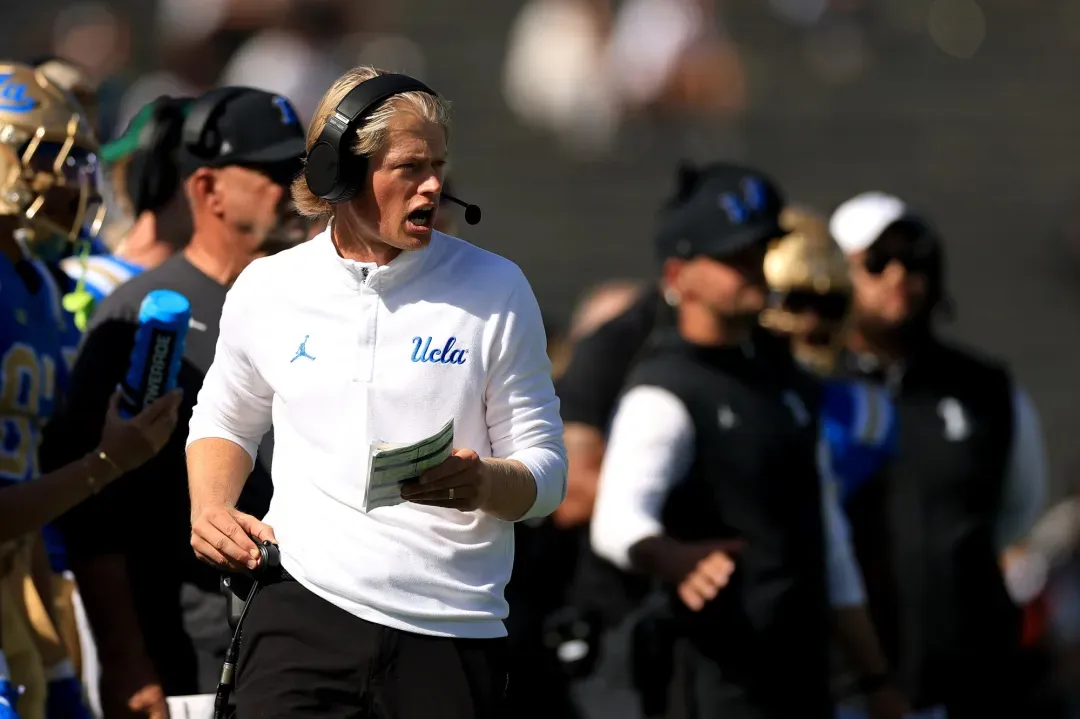
Jerry Neuheisel (Northwestern)
Neuheisel, a former UCLA quarterback and son of former coach Rick Neuheisel, coached at UCLA for years as a graduate assistant, wide receivers, tight ends, and assistant head coach. In 2025, he took over interim offensive play-calling duties midseason and helped produce some of the Bruins’ better stretches. In 2026, he joined Northwestern as quarterbacks coach under offensive coordinator Chip Kelly.
Influenced by Chip Kelly’s systems, the approach tends toward tempo, spacing, and modern concepts that create mismatches, with an emphasis on quarterback development and efficiency. Nebraska fit: Neuheisel brings Big Ten experience, recent play-calling, and a connection to high-level offensive thinkers. His quarterback background and ability to contribute to winning stretches make him an intriguing developmental/play-calling option, though his full OC sample is limited. Nebraska won’t be able to land Chip Kelly, so the next best thing is his understudy.
Mitch Dahlen (Oregon State)
Dahlen has been a key piece of Kalen DeBoer’s staff, contributing to explosive passing attacks, College Football Playoff runs, and the development of several NFL quarterbacks. In 2026, he became Oregon State’s OC/QBs coach under JaMarcus Shephard, his first full OC role at this level. He is an Oregon native with deep Beavers ties.
The offenses he has helped build are explosive and pass-oriented, featuring strong quarterback development, vertical elements, and high efficiency, while remaining adaptable.
Nebraska fit: Dahlen offers elite quarterback-development credentials from top programs and a track record of explosive production. His first full OC role at Oregon State provides a fresh but high-upside option; the passing emphasis would need to be balanced with Rhule’s run priorities, but the developmental expertise is a major asset for a young or dual-threat signal-caller. He will be another one who will be tough to pull away.
These candidates span styles from pure physical/run-first to high-scoring RPO/spread and balanced/explosive modern systems. The best fit will depend on how closely Rhule wants to prioritize trench physicality versus explosives and tempo, as well as the ability to develop the current quarterback room and install quickly for 2027.